

Italy with a baby or toddler: Rome, Florence, Venice, Amalfi Coast, high-speed trains & 230V rules
Key facts
Short answer: Italy uses 230V / 50Hz electricity (Type C, F & L sockets) — leave US 120V bottle sterilisers/warmers at home and use cold-water sterilising tablets + low-mineral bottled water (Acqua Sant'Anna or Panna). On Frecciarossa and Italo high-speed trains, children under 4 ride free; bring a compact stroller with suspension for Rome and Florence cobblestones and a front baby carrier for Venice's 400 stepped bridges and Positano.
In Italy, babies are treated like royalty (bambini). Waiters warm bottles without being asked, chefs happily whip up a small bowl of plain pasta with olive oil and Parmigiano (pasta in bianco) or vegetable broth (passato di verdura) even when it isn't on the menu, and families with a stroller or baby in arms are routinely waved to the front of the priority line at Italian airports, the Vatican Museums, the Colosseum, and the Uffizi Gallery.
To make your Italian trip smooth from day one, you just need to plan for three practical Italian realities: Italy's 230V / 50Hz electrical outlets (which will fry a single-voltage US 120V bottle steriliser or warmer), choosing the right stroller vs baby carrier for Roman cobblestones (sanpietrini) and Venice's 400 stepped bridges, and using Trenitalia Frecciarossa / Italo high-speed trains (where children under 4 ride free!).
Every rule below is sourced from official Trenitalia/Italo policies, Italian Ministry of Infrastructure and Transport road rules, EU Entry/Exit System (EES) rules, and museum accessibility pages, checked October 2026.
Quick answers: Italy with a baby
| Topic / Rule | Official Italian policy & practical parent rule |
|---|---|
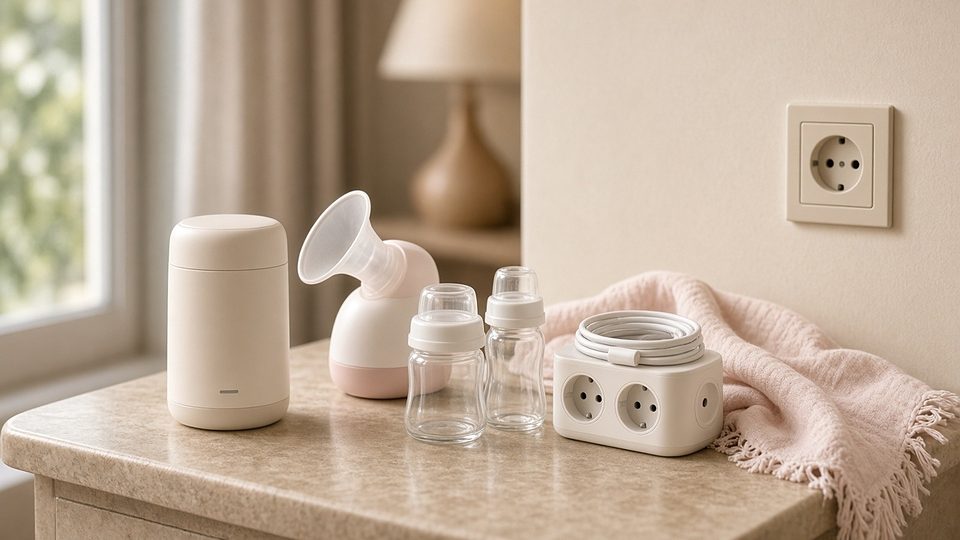
| 110V vs 240V power & plugs | 230V / 50Hz, Type C, F (2 round pins) & Type L (3 inline round pins). DO NOT plug in a US 120V bottle steriliser or warmer — it will burn out immediately! Dual-voltage (100–240V) breast pumps & monitors work safely with a Type C adapter (see our 110V vs 240V Dual-Voltage Baby Gear Guide) |
| Passports & EU EES check | Every baby needs their own Passport. At Italian airports, non-EU families register in the free EU Entry/Exit System (EES) — children under 12 are photographed only (no fingerprints); see our EU EES with a Baby guide |
| High-speed trains (Frecciarossa & Italo) | Children under 4 (0–3 yrs) travel FREE on an adult's lap across Italy's high-speed rail network (Rome–Florence in 1h 30m; Rome–Venice in 3h 45m; Rome–Naples in 1h 10m), and strollers travel free |
| Stroller vs carrier by city | Rome & Florence: Compact stroller with suspension (like Bugaboo Butterfly 2 or Joolz Aer+) + carrier for archaeological sites. Venice & Amalfi Coast (Positano): Bring a breathable front/back baby carrier for stepped bridges and cliff stairs! |
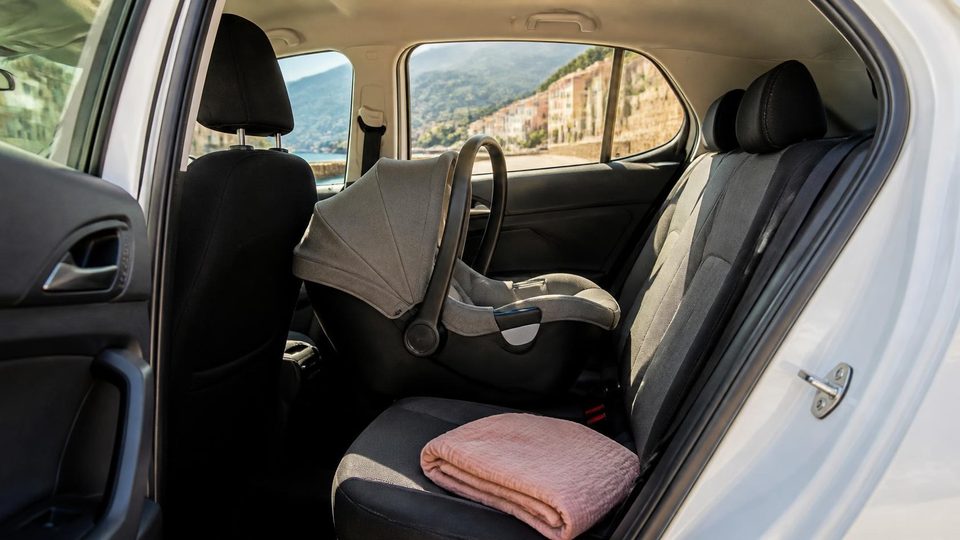
| Italian car seat law & "Anti-Abandonment" device | Children under 150 cm must use an R129 (i-Size) or R44 car seat.(Note: Italy's mandatory anti-abandonment Bluetooth alarm sensor law for under-4s applies only to residents with Italian-registered vehicles/drivers — foreign tourists are exempt, though rental desks offer them.) |
| Diapers, formula & pharmacies | Italian Farmacie (green cross sign), Parafarmacie, and supermarkets (Esselunga, Conad, Coop, Carrefour) stock Pampers Progressi, Huggies, Mellin, Plasmon (classic Italian baby biscuits, purées & pasta!), Aptamil, HiPP, and Humana |
1. 110V vs 240V Power, Plugs & Baby Steriliser Rules in Italy (230V / 50Hz)
Before packing for Rome, Florence, Venice, Milan, or Sicily, check the voltage rating on every baby appliance (see our full 110V vs 240V Dual-Voltage Baby Travel Gear & Bottle Steriliser Guide):
- Italian Mains Voltage & Frequency: Italy operates on
230Vat50Hz— nearly double North America's120V(and yielding 4× the wattage on resistive heating elements). - Italian Wall Sockets (Type C, F & L): Most modern Italian hotel rooms have universal "bipasso" sockets that accept standard European 2-pin Type C / Type F plugs as well as Italy's unique 3-pin inline Type L plug. A standard 2-round-pin European Type C plug adapter fits virtually every hotel socket in Italy.
- For US & Canadian Parents:
- Leave at home: All single-voltage
120Velectric steam bottle sterilisers, countertop bottle warmers, and Formula Pro dispensers. Plugging them into a230VItalian outlet with a plug adapter will blow the fuse, melt the heater, and often trip the hotel floor's sensitive circuit breaker. - Safe to bring: Any dual-voltage (
INPUT: 100-240V ~ 50/60Hz) breast pump (Spectra S1/S2, Elvie, Willow, Momcozy, Medela), video baby monitor (Nanit, Infant Optics, Eufy), and USB-C portable sound machine or USB-C portable bottle warmer. - For UK Parents: Your
230V–240VUK baby appliances are voltage-compatible with Italy — you just need a UK Type G to European Type C/F plug adapter. - Best ways to sterilise & warm bottles in Italy:
- Cold-water sterilising tablets (Milton or local Chicco/Amuchina): Dissolve a Milton Sterilising Tablet in cold tap water (or bottled water) inside a silicone travel bag for 15 minutes — zero electricity, zero boiling, and zero rinsing! (In Italian pharmacies, the local equivalent is Chicco SterilNatural cold disinfecting liquid/tablets or Milton.)
- Low-mineral Italian bottled water for formula (Acqua oligominerale): While municipal tap water in Rome (famous for its fresh aqueduct drinking fountains, nasoni), Florence, and Milan is potable, Italian pediatricians universally recommend using bottled low-mineral water (Acqua Sant'Anna, Acqua Panna, Amorosa Humana, or Levissima — look for a baby bottle icon or "indicata per la preparazione degli alimenti dei lattanti" on the label!) when mixing infant formula.
2. City-by-city stroller & baby strategy: Rome, Florence, Venice, Amalfi & Lake Como
Rome & Vatican City
- Cobblestones (sanpietrini) & sidewalks: Historic central Rome (Centro Storico, Trastevere, Monti) is paved with small basalt cobblestone blocks. A flimsy umbrella stroller with tiny plastic wheels will rattle and stick; bring a sturdy compact travel stroller with all-wheel suspension like the Bugaboo Butterfly 2 (
16.1 lbs / 7.3 kg) or UPPAbaby Minu V2 (16.9 lbs / 7.7 kg). - Colosseum, Roman Forum & Vatican Museums with a baby:
- Colosseum: Has an elevator connecting the ground level to the upper tier for visitors with strollers, and free entry for children! For the uneven ancient stone paths of the Roman Forum and Palatine Hill, park or fold the stroller and use a front baby carrier.
- Vatican Museums & St. Peter's Basilica: Strollers are permitted inside both the Vatican Museums (including via a dedicated accessible route to the Sistine Chapel!) and St. Peter's Basilica, and security staff regularly wave families with babies and strollers through the priority/accessible lane.
- Villa Borghese: When your toddler needs to run on grass away from scooters and traffic, head up to Villa Borghese park — shady pine trees, flat paths, a tiny children's train, and a cinema/playhouse for little ones.
Florence & Tuscany
- Walkability: Florence's historic centre is compact and flat (around the Duomo, Piazza della Signoria, and along the Arno River), though Medieval stone flagstones can be bumpy. The Uffizi Gallery and Palazzo Pitti / Boboli Gardens welcome strollers (the Uffizi has lifts and priority admission for families with young babies; Boboli Gardens has steep gravel paths best suited to a baby carrier).
- Renting a car for Tuscany hill towns (Siena, San Gimignano, Lucca, Val d'Orcia): Remember that historic Tuscan town centres enforce strict camera-monitored ZTL (Zona a Traffico Limitato) no-drive zones. Always park in the signed outer Parcheggio lots just outside the town walls and roll your stroller or wear your baby inside! Lucca is Tuscany's #1 stroller town because its wide, tree-lined Renaissance city walls form a dead-flat 2.5-mile paved loop around the town.
Venice (The 400-Bridge Rule)
- Leave bulky strollers at the hotel in Venice: Venice is 100% car-free, which is magical for toddlers who love to walk on open campi (squares) — but almost every one of Venice's 400+ canal bridges has steps (only a handful of modern bridges like the Constitution Bridge and Riva degli Schiavoni ramps have step-free ramps).
- How to do Venice with a baby: Wear your baby in a comfortable front or back carrier for sightseeing, or carry an ultra-lightweight one-hand stroller like the Joolz Aer+ (
13.2 lbs / 6 kg, with a built-in shoulder carry strap!) or Stokke YOYO3 (13.6 lbs / 6.2 kg) that you can effortlessly lift over a small footbridge. On ACTV Vaporetto water buses, children under 6 ride free, and strollers roll straight on board!
Amalfi Coast, Sorrento & Capri vs Puglia & Lake Como
- Sorrento over Positano for your home base: Positano is built vertically into a cliffside with hundreds of steep stairs and narrow, sidewalk-free coastal roads. With a baby or toddler, base yourself in Sorrento (flat, stroller-friendly town centre, parks, and easy ferry/train links) or Maiori / Minori (which have flat beachfront promenades and sandy beaches!). Use ferries (where strollers roll straight on and off) rather than twisting SITA cliff buses to hop between Amalfi towns.
3. High-speed trains in Italy with a baby (Trenitalia Frecciarossa & Italo)
Italy's high-speed rail network (Trenitalia Frecciarossa and Italo Treno) is faster, cheaper, and vastly easier with a baby than flying or driving between Rome, Florence, Venice, Milan, Bologna, and Naples:
- Under-4s ride FREE: On both Frecciarossa and Italo, children under 4 years old (0 to 3 years) travel completely free on an adult's lap (no ticket required, or select the discounted seat option if you want a dedicated seat for your car seat/stroller).
- Nursery changing tables & stroller storage: Every Frecciarossa and Italo train has a spacious accessible restroom equipped with a fold-down baby changing table, wide luggage racks at the end of each carriage where a folded stroller fits easily, and
230Vpower sockets at every seat. - Book "Bimbi Gratis" or Executive/Prima Business class: Trenitalia's Bimbi Gratis family offer lets children under 15 travel free while adults pay the Base fare in classes with plenty of legroom for a baby.
4. Dining out (il coperto), pharmacies & buying baby gear in Italy
- What to order for a weaning baby or toddler in any Italian trattoria: Even at 7:00 PM when restaurants open, ask the waiter for "un piattino di pasta in bianco con olio e parmigiano" (a small plate of short pasta with extra-virgin olive oil and grated Parmesan) or "pastina in brodo" (tiny baby pasta stars cooked in mild vegetable or chicken broth). Every kitchen in Italy makes this daily for local children!
- Italian baby food & diaper brands:
- Plasmon & Mellin: Italy's beloved heritage baby brands, found in every supermarket (Esselunga, Conad, Coop, Pam, Carrefour). Pick up a box of Biscotti Plasmon (melt-in-the-mouth fortified baby biscuits that Italian babies have eaten since 1902) and homestyle jars of baby purées (omogeneizzati) in flavours including Parmigiano Reggiano, prosciutto, rabbit, sea bream, pear, and apple.
- Diapers (pannolini): Pampers Progressi (Italy's top premium soft diaper line, equivalent to Pampers Swaddlers) and Huggies are sold in every supermarket and Farmacia.
Good to know — Booking Italian Family Hotels, Aparthotels & Mediterranean Cruises: Historic buildings in Rome, Florence, and Venice often have narrow stairs, so always filter by lift/elevator access, cribs/cots available, and air conditioning on Booking.com Family Stays and Booking.com Aparthotels, or compare Mediterranean sailings from Rome (Civitavecchia), Genoa, and Venice on CruiseDirect Family Cruises (affiliate links).
Related European & international baby guides


- EU Entry/Exit System (EES) with a Baby
- France with a Baby · Spain with a Baby · Greece with a Baby
- Best Travel Strollers for Flying (US & UK)
FAQs
Can I plug my US bottle warmer or steriliser into an Italian hotel outlet?
No! Italy uses 230V / 50Hz electricity (Type C, F, and L sockets). A single-voltage 120V US bottle steriliser or warmer will overheat and burn out within seconds on 230V. Bring a dual-voltage (100–240V) breast pump and baby monitor with a Type C adapter, and use cold-water sterilising tablets (Milton or Chicco) or microwave steam bags for bottles.
Do babies need a ticket on Frecciarossa and Italo trains in Italy?
No. On both Trenitalia (Frecciarossa, Frecciargento, Intercity, Regionale) and Italo high-speed trains, children under 4 years old travel free of charge when held on an accompanying adult's lap, and folded strollers travel free.
Is Venice doable with a stroller?
Venice has over 400 canal bridges, almost all of which have steps. Leave heavy full-size strollers behind and bring a front or back baby carrier paired with an ultra-lightweight shoulder-strap stroller like the Joolz Aer+ (13.2 lbs / 6 kg) or Stokke YOYO3 (13.6 lbs / 6.2 kg).
Sources
- Trenitalia Official: Travelling with Family & Children (Bimbi Gratis & Under-4 Free Rule)
- Automobile Club d'Italia (ACI) & Ministry of Transport: Child Car Seat Regulations (Art. 172 Codice della Strada)
- US Department of State: Italy Travel Information
- UK GOV.UK Foreign Travel Advice: Italy
Last checked and updated: · Kiddieko · How we check facts


